
January 2026 Organisational Newsletter: Happy New Year!
Jan 01, 2026
January: Welcome back!
Hello there,
Happy new year! I hope that you've had an easeful start to the new year.
We're delighted to share our first newsletter back this year.
To ensure that our work directly supports you, your team and your organisation, we'd like to start the year by asking you if there are any topics in particular that you would like us to share more information on.
Any and all suggestions are welcomed, please hit "reply" to this email - we look forward to hearing from you!
Cheers,
Asami
🌱 Important dates and festivals this month
Some important cultural festival and dates this month include:
January 13: Lohri. Celebrated primarily in the Punjab region of India and by Sikh communities, this harvest festival marks the passing of the winter solstice and the start of longer, warmer days. It is typically celebrated with bonfires, singing, and eating traditional sweets.
January 14: Makar Sankranti / Thai Pongal. Celebrated across India, Nepal, and Sri Lanka, this is a major harvest festival that marks the Sun's transit into the zodiac sign of Makara (Capricorn), which symbolizes the end of winter. The festival is also an opportunity to express gratitude to the Sun, the Earth, rain, and cattle for their indispensable contributions to a bountiful harvest.
January 23: Vasant Panchami. Celebrated in India, Nepal, and Bangladesh, this Hindu festival marks the arrival of spring and is dedicated to Saraswati, the Goddess of knowledge, music, and art.
How will your organisation be marking these important dates this month? Feel free to reach out to us if you'd like some ideas!
🦉 Research perspectives to strengthen your culturally-responsive practice:
A recent longitudinal study by Xiong et al. (2025) examined changes to mental wellbeing among Chinese international students in Australia within the first 5 months of their arrival, and found that acculturative stress increased over time. These stressors were more prominently linked to language and communication difficulties. However, when comparing levels of distress, loneliness, wellbeing, and social support against native Chinese students in China, they found no significant differences in these wellbeing indicators.
What does this mean for clinicians and the community?
Mental health practitioners should be aware of unique stressors which may impact the mental health of Asian mental health students. These stressors can function over and above common stressors such as academic stress. The lack of differences in wellbeing indicators between native and international Chinese students, despite higher levels of acculturative stress among the latter, may suggest that current measures of wellbeing may also not be sensitive enough to capture mental health struggles tied to acculturation. Practitioners should be aware of potential downfalls in cross-cultural validity within their testing/measurement tools and seek to always supplement quantitative results with holistic qualitative information about the client's situation.
Reflective prompt:
How might you adjust your intake and assessment process to specifically identify and address increasing acculturative stressors (like language difficulties), even when a Chinese international student's score on a general psychological distress scale appears to indicate sound wellbeing?
You're welcome to reach out to us by replying to this email, if you'd like some perspective on this.
💡Our new recorded training is live.
The new professional standards for psychologists have been established and a core element of this shift is to embed cultural competency throughout all aspects of practice. As the leading voice for Asian mental health in Australia, we can support you to meet these requirements in regards to the largest culturally diverse community in Australia.
After supporting organisations like headspace Syndal and Elsternwick, Monash Youth Services and The Australasian Genetic Counsellors Society in 2025, we have now launched a recorded version of our train our core training for you to begin right now.
Ready to learn more? Click the link here!
🔎 Connect with our new therapists.
Our Asian Australian mental health practitioner list introduces you to private practitioners who are skilled in supporting the Asian community's mental health needs.
Our private practitioners are available for referrals. Please contact them directly via their profile HERE. 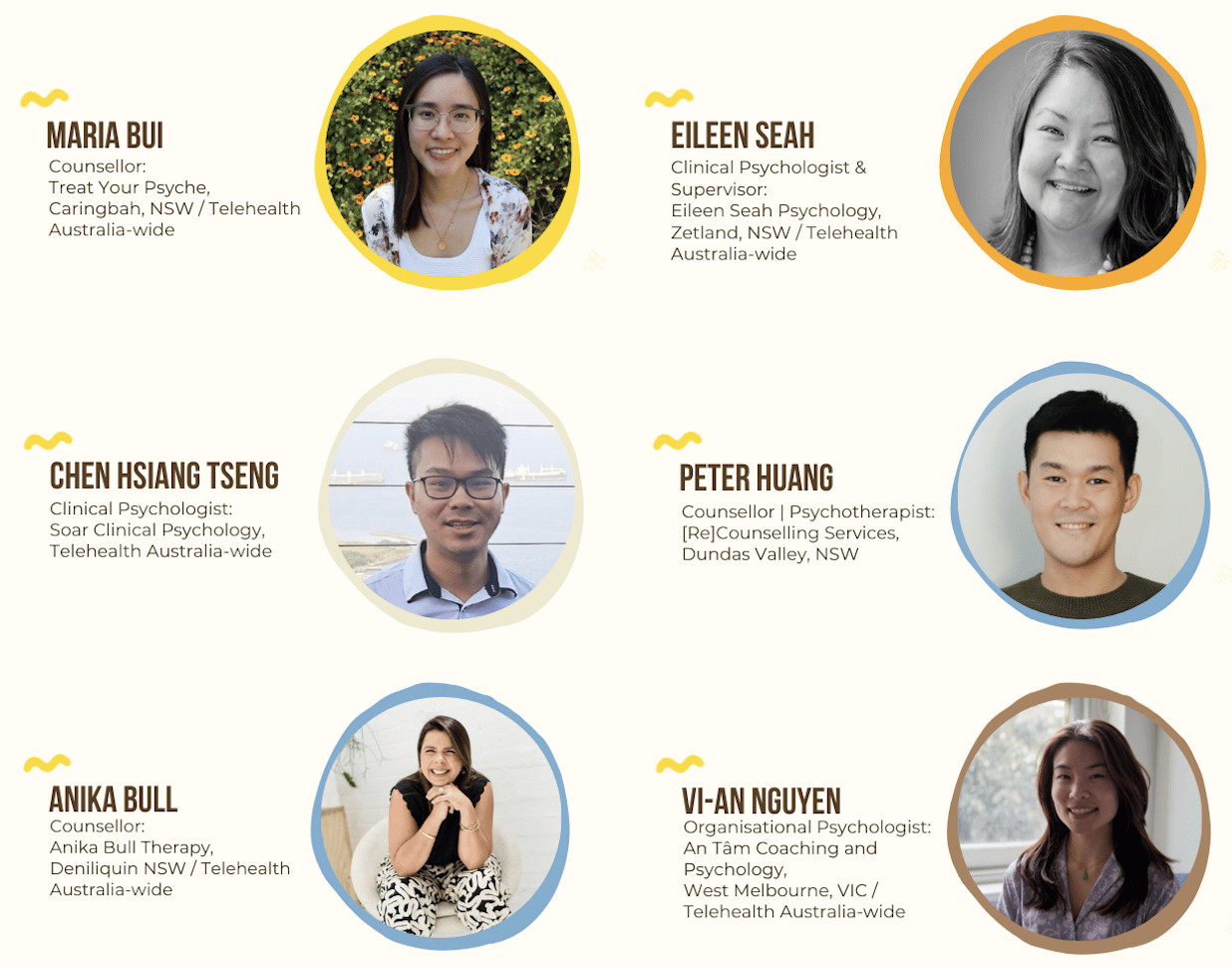
✨Thank you for reading up to this point!
We rely heavily on your generous support to provide ongoing and free mental health resources to Asian communities in Australia.
Support Shapes and Sounds HERE.
🐌 And last but not least:
Recently on Linkedin,
We shared our practitioner interview with counsellor Siew-Wei Hooke. Read our interview with her here.
💡For community members:
We created the "Essential Guide for Asian Australian Mental Health" by surveying over 350 Asian Australians during Covid-19 lockdowns.
Download our guide and learn about the three most pertinent areas of concern for the Asian community, with tips and strategies to support you through.
🤝For mental health service providers:
Shapes and Sounds supports mental health organisations and teams to feel confident and resourced in providing culturally-responsive care to the Asian community in Australia.
Download our information pack to learn more.