
March Organisational Newsletter: Seeking partnership opportunities
Mar 01, 2026
March: Amplifying international student voices.
Hi,
This month, we'll be kicking off our international student leadership program, Student Changemakers in partnership with Embrace Multicultural Mental Health, with our very first cohort of students.
The response has been overwhelming, with more than 45 participants now on the waiting list, a clear signal of how strongly international students are seeking spaces where their lived experiences are valued, and able to contribute meaningfully to broader mental health conversations.
What has stood out most hasn’t been the numbers, but the themes emerging from participants: a desire for connection, meaningful skill development, and an eagerness to help services learn about how they can better support future international students.
💡This strong engagement has prompted us to seek expressions of interest from potential partner organisations or funders so that we can run this program again in semester 2.
If you work with international students or are passionate about their wellbeing, and you're curious about how we may be able to collaborate, please send us an email at hello@justshapesandsounds.com and I will send you further information.
Thank you for the work you continue to do in supporting diverse communities. We look forward to sharing more updates with you soon.
Cheers,
Asami
🌱 Important dates and festivals this month
Some important cultural festival and dates this month include:
March 3: Holi. Celebrated in India and Nepal, this Hindu "Festival of Colours" marks the arrival of spring and the victory of good over evil. Participants throw colored powders and water to celebrate joy and the renewal of relationships.
March 3: Magha Puja. A major Buddhist festival in Thailand, Laos, and Cambodia commemorating a historic gathering of the Buddha’s disciples. It is marked by temple visits and evening candlelit processions.
March 4: Hola Mohalla. A Sikh festival typically following Holi that showcases martial arts (Gatka) and simulated battles. It emphasizes valor, community service, and spiritual preparedness.
March 19: Eid al-Fitr. Marking the end of Ramadan, this major holiday is celebrated across South and Southeast Asia with communal prayers, festive meals, and the tradition of seeking forgiveness from elders.
March 19: Nyepi. The Balinese Hindu New Year in Indonesia, observed as a day of absolute silence, fasting, and meditation. The island shuts down completely to signify spiritual purification and the driving away of evil spirits.
March 19: Nowruz. The Persian New Year marking the spring equinox. It is widely celebrated in Central Asia and by Parsi communities in India with symbolic festive tables and family gatherings to honor nature's rebirth.
March 20: Qingming Festival. Also known as Tomb Sweeping Day, this East Asian tradition involves families visiting ancestral graves to clean the sites and offer food, honoring filial piety at the start of spring.
How will your organisation be marking these important dates this month? Feel free to reach out to us if you'd like some ideas!
🦉 Research perspectives to strengthen your culturally-responsive practice:
Using mixed methods, Corney et al. (2024) explored accomodation, wellbeing, connectedness and help seeking behaviours among international students in Australia. Their study found that international students reported significantly lower subjective wellbeing compared to Australian norms. Being able to live in safe and preferred accomodation most strongly predicted improvements in wellbeing, followed by regular physical activity and social connection. Many students also reported the negative impacts of loneliness, isolation, and lack of belonging.
What does this mean for clinicians and the community?
Clinicians and services must recognise international students' significantly lower wellbeing and high-risk factors for mental ill-health. There is also a greater need for more affordable, culturally appropriate mental health services and policy changes to ensure safe, preferred, and affordable accommodation for this population.
Reflective prompt:
Do you know of any international student-specific mental health services? How confident are you in supporting the mental health needs of international students? What steps can you take to increase your awareness and readiness to support international students?
You're welcome to reach out to us by replying to this email, if you'd like some perspective on this.
💡Our new recorded training is live.
The new professional standards for psychologists have been established and a core element of this shift is to embed cultural competency throughout all aspects of practice. As the leading voice for Asian mental health in Australia, we can support you to meet these requirements in regards to the largest culturally diverse community in Australia.
After supporting organisations like headspace Syndal and Elsternwick, Monash Youth Services and The Australasian Genetic Counsellors Society in 2025, we have now launched a recorded version of our train our core training for you to begin right now.
Ready to learn more? Click the link here!
🔎 Connect with our new therapists.
Our Asian Australian mental health practitioner list introduces you to private practitioners who are skilled in supporting the Asian community's mental health needs.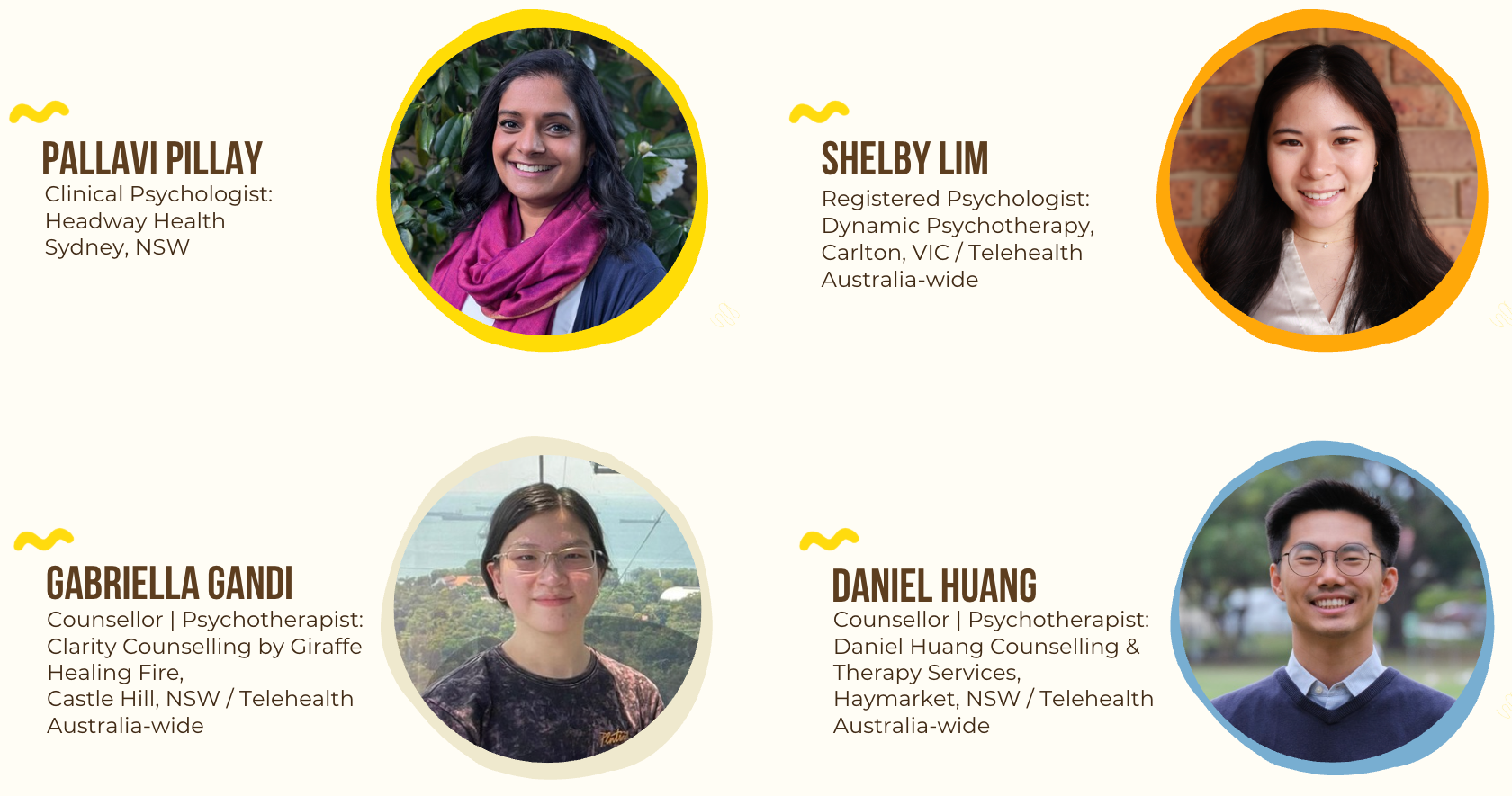
Our private practitioners are available for referrals. Please contact them directly via their profile HERE.
✨Thank you for reading up to this point!
We rely heavily on your generous support to provide ongoing and free mental health resources to Asian communities in Australia.
Support Shapes and Sounds HERE.
🐌 And last but not least:
Recently on Linkedin,
We shared our practitioner interview with clinical and forensic psychologist York Xiang Yan Hong. Read our interview with him here.
💡For community members:
We created the "Essential Guide for Asian Australian Mental Health" by surveying over 350 Asian Australians during Covid-19 lockdowns.
Download our guide and learn about the three most pertinent areas of concern for the Asian community, with tips and strategies to support you through.
🤝For mental health service providers:
Shapes and Sounds supports mental health organisations and teams to feel confident and resourced in providing culturally-responsive care to the Asian community in Australia.
Download our information pack to learn more.