
Meet Asian Australian Counsellor Shierly Irawan Halim
Oct 27, 2026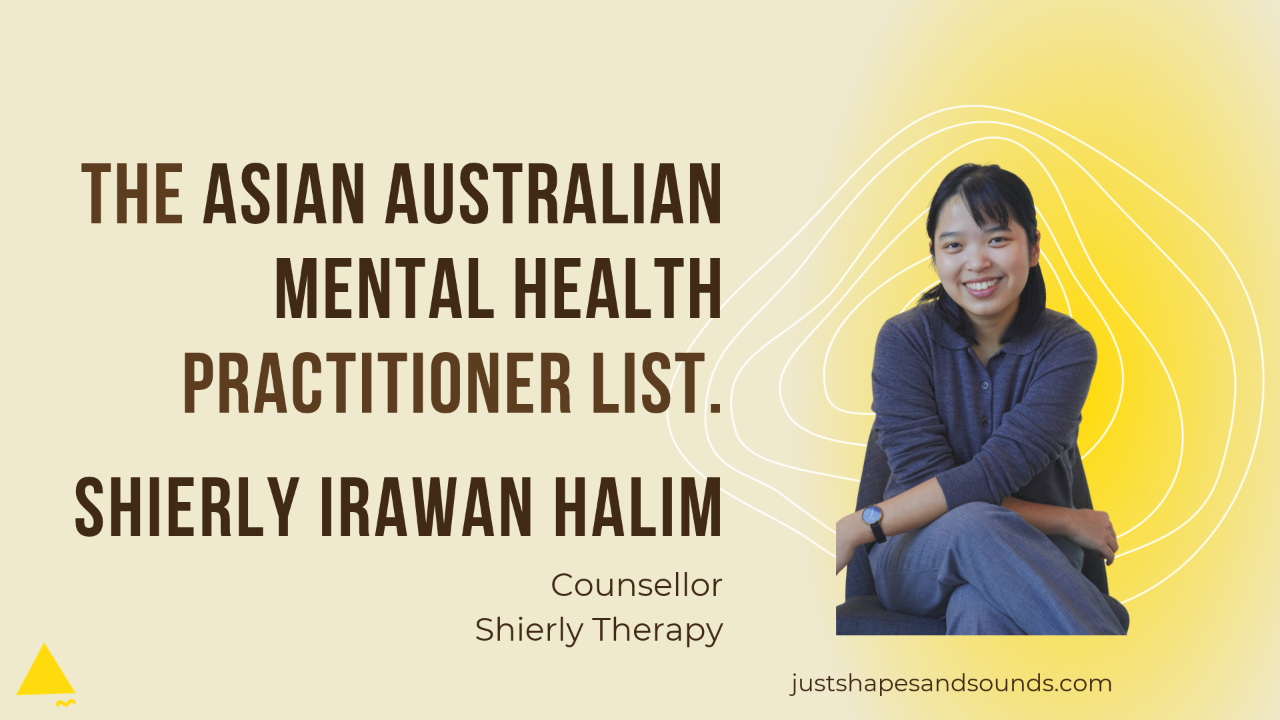
We know that it's not always easy trying to work out which therapist we might like to work with: Because the decision isn't just about where they're located and when they're available, but there's a bit more of a human, relational element to the decision too.
So here at Shapes and Sounds, we want to help make that process just a little easier.
Every month, we'll be introducing a therapist from the Asian Australian Mental Health Practitioner List to help you gain a bit more insight into who you feel might be a good fit for you or someone that you know.
This month we're excited to connect you with Shierly who is a counsellor offering services in VIC and telehealth. We hope you enjoy connecting with Shierly below!
~
1. What led you to choosing mental health as a career?
I chose mental health as a career because of my own life experiences. Growing up, I experienced what it felt like to struggle in silence and to believe that asking for help wasn't something you did. Those experiences gave me a deep appreciation for how isolating it can feel when you don't have a safe space to be heard or understood.
Over time, that personal experience grew into a genuine passion for supporting others through their own challenges. What began as a hope that others wouldn't have to feel as alone as I once did became a commitment to helping people better understand themselves, navigate life's difficulties, and recognise that change is possible. It's incredibly meaningful to be able to walk alongside people as they build insight, resilience, and move towards the life they want to create.
2. What is your unique cultural heritage?
I identify as Chinese Indonesian, an ethnic minority group in Indonesia. Growing up in this cultural context has shaped how I understand identity, belonging, family, and community. Like many people from collectivist cultures, I was raised with values around respect, responsibility, and prioritising the needs of others, while also experiencing the complexities that can come with balancing personal needs and family or cultural expectations.
3. What are your areas of specialty and what kind of frameworks do you work from?
I work with adults and young adults experiencing a range of emotional, relational, and life challenges, including anxiety, stress, burnout, relationship difficulties, self-esteem, life transitions, cultural identity, and feelings of loneliness or disconnection.
My approach is integrative and person-centred, recognising that every individual brings a unique story, set of strengths, and lived experiences. Rather than relying on a single therapeutic model, I draw on evidence-based approaches such as Cognitive Behavioural Therapy (CBT), Acceptance and Commitment Therapy (ACT), Emotion-Focused Therapy (EFT), and other approaches where appropriate, tailoring therapy to each person's goals and needs. I am currently learning Internal Family System (IFS) modality.
4. What kind of clients are you best able to support?
I work best with adults and young adults who are looking for a space to slow down, reflect, and better understand themselves. Many of my clients are navigating anxiety, relationship challenges, burnout, life transitions, or feeling stuck in patterns they would like to change.
As someone who has lived, studied, and worked across both Indonesia and Australia, I also understand the complexities of navigating different cultures, identities, family expectations, and building a life away from familiar support systems. I offer counselling in both English and Bahasa Indonesia and welcome clients from diverse cultural backgrounds.
More than any particular presenting concern, I enjoy working with people who are curious about themselves and open to exploring both the immediate challenges they are facing and the deeper patterns that may be shaping their lives.
5. If you could be your own therapist right now, what do you think you would say to yourself?
If I could be my own therapist right now, I think I would say, "You don't need permission to exist."
Growing up, I learnt to prioritise other people's needs, expectations, and comfort over my own. I became very good at staying small, adapting to those around me, and avoiding taking up space. Over time, I realised that this wasn't about a lack of confidence, but about believing that I needed permission to fully be myself.
One of the biggest lessons I've learnt is that my needs, opinions, and presence are just as valid as anyone else's. I don't have to earn the right to take up space or wait for someone else's approval to pursue the life I want.
~
Connect with Shierly via our Asian Australian Mental Health Practitioner List HERE.
Alternatively, if you feel like Shierly may be a good fit for someone that you know, be sure to forward this page on to them too. Let us continue to not only support ourselves but all those around us too!
If you require urgent assistance, please do not contact Shierly or any of the practitioners on this list. Instead, please call emergency services on 000 or call Lifeline on 13 11 14.
Shapes and Sounds does not recommend or endorse Shierly or any of the practitioners listed on the Asian Australian Mental Health Practitioner List.
Please always consult your GP before making changes to your mental health care plan.
💡For community members:
We created the "Essential Guide for Asian Australian Mental Health" by surveying over 350 Asian Australians during Covid-19 lockdowns.
Download our guide and learn about the three most pertinent areas of concern for the Asian community, with tips and strategies to support you through.
🤝For mental health service providers:
Shapes and Sounds supports mental health organisations and teams to feel confident and resourced in providing culturally-responsive care to the Asian community in Australia.
Download our information pack to learn more.