
Why Culture Needs to Be More Than an Afterthought in Therapy
Aug 18, 2026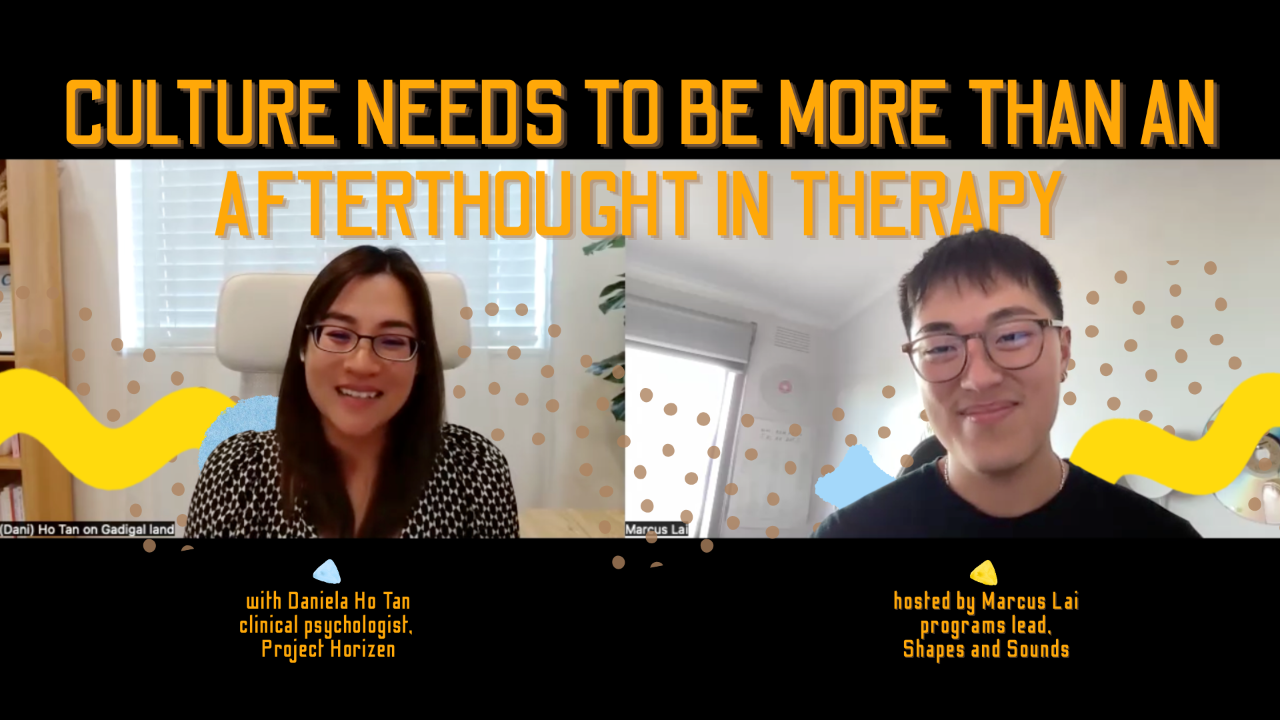
What happens when the evidence that shapes our mental health care doesn't reflect most of the world's population?
It's a question that sits at the heart of our latest conversation with clinical psychologist, advanced accredited schema therapist and PhD candidate Daniela Ho Tan, founder of Project Horizen.
In this conversation, Daniela explores how culture influences the way people understand themselves, their relationships and their mental health, and why clinicians need to move beyond treating culture as simply another box to tick during assessment.
Drawing on over a decade of clinical experience, Daniela reflects on working with clients of Asian heritage and the growing recognition that many psychological approaches were developed within Western contexts. While these therapies can be incredibly valuable, she argues that effective therapy also requires curiosity about a person's cultural context, values and lived experiences.
Together, we discuss:
- What schema therapy is and who it can help
- Why cultural context changes the way we understand schemas and emotional needs
- Common patterns Daniela has observed when working with clients of Asian heritage
- The importance of avoiding the pathologisation of cultural values and family dynamics
- How therapists can integrate cultural humility into assessment, formulation and intervention
- Daniela's PhD research exploring culturally responsive schema therapy with Asian heritage populations
One of the most thought-provoking ideas from our conversation is Daniela's perspective that the clinical is embedded within the culture, not the other way around. Rather than viewing culture as something separate from therapy, she encourages clinicians to recognise that every therapeutic interaction occurs within a cultural context, including our own.
The discussion also highlights the importance of moving beyond assumptions. Whether we're working with migrant communities, international students, second-generation Australians or anyone else, understanding a person's unique cultural experiences requires listening first, rather than relying on stereotypes or preconceived ideas.
As Daniela shares throughout the conversation, culturally responsive practice is not about memorising cultural facts or becoming an expert in every community. Instead, it's about approaching clients with humility, curiosity and a willingness to understand how culture shapes their experiences, relationships and wellbeing.
Learn more:
Daniela will soon be delivering her workshop, East Meets West: Integrating Culture into Schema Therapy Practice for Asian Heritage Populations, through Project Horizen. (Details are here!)
Designed for psychologists and mental health professionals, the workshop explores practical ways to integrate culture into schema therapy, including culturally responsive assessment, formulation, imagery rescripting and chair work.
Watch our full interview with Daniela above to learn more about her work, her research, and how you can further incorporate culturally-responsive perspectives in your life and work.
💡For community members:
We created the "Essential Guide for Asian Australian Mental Health" by surveying over 350 Asian Australians during Covid-19 lockdowns.
Download our guide and learn about the three most pertinent areas of concern for the Asian community, with tips and strategies to support you through.
🤝For mental health service providers:
Shapes and Sounds supports mental health organisations and teams to feel confident and resourced in providing culturally-responsive care to the Asian community in Australia.
Download our information pack to learn more.