
February 2026 Organisational Newsletter: International student support
Feb 01, 2026
February: International Student Support
Hello there,
This month, we're excited to announce our new offering to support international students in Melbourne, in partnership with Embrace Multicultural Mental Health.
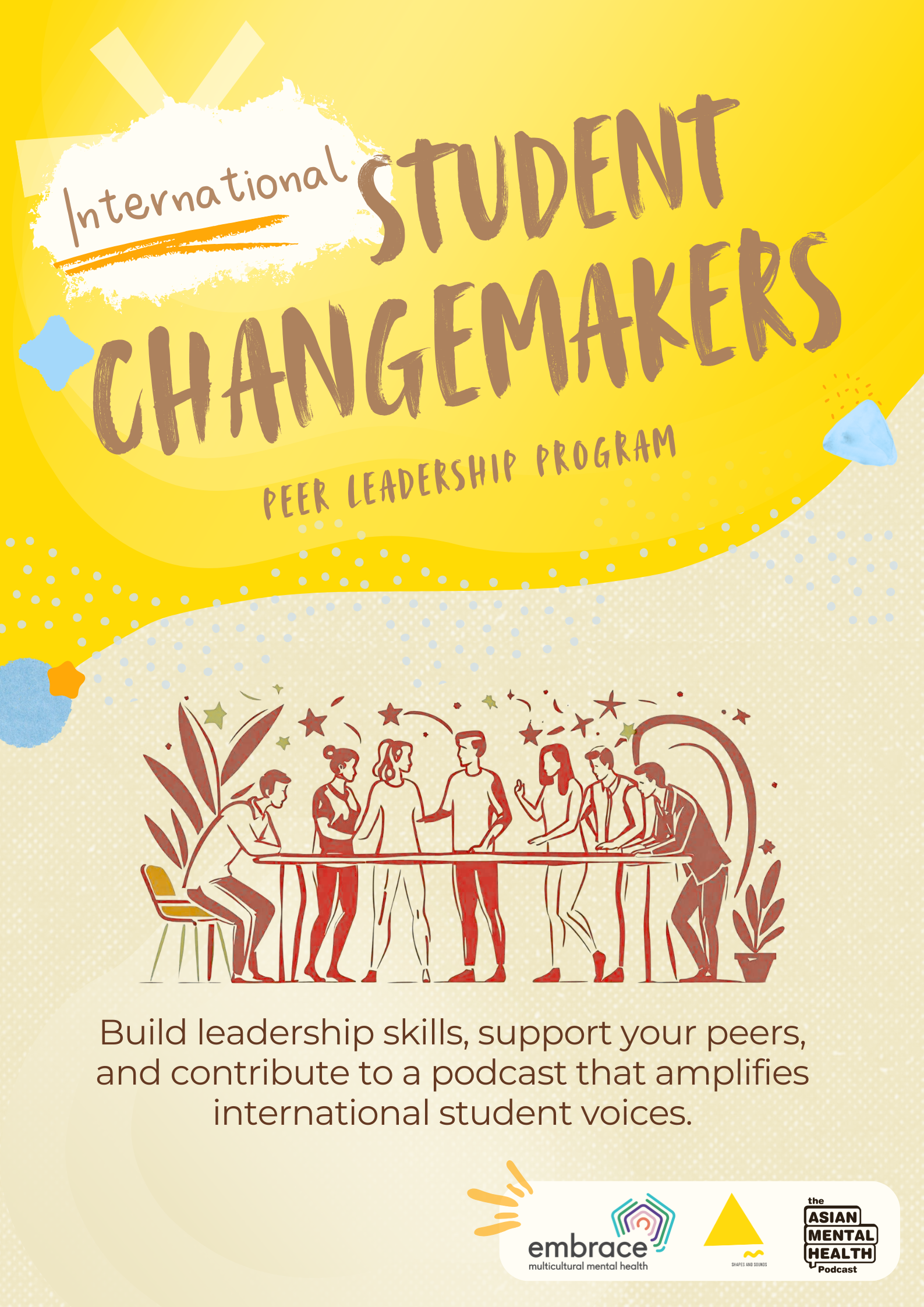
🚀Student Changemakers: Peer Leadership Program
We’re launching a short, 3-week Mental Health Leadership Program for international students, focused on improving wellbeing and amplifying student voices.
Participants will build confidence, learn how to support peers safely, and contribute insights that inform better mental health support for international students in Australia via our podcast.
We invite service providers to share this opportunity with international students who may be interested in leadership, wellbeing, or advocacy via this link.
Dates: Tuesdays 3pm - 5pm: March 10th, 24th and April 7th
Location: Study Melbourne (17 Hardware Lane, CBD)
Bilingual guests (Mandarin/English) from: headspace Box Hill, headspace Syndal, Back on Track Psychology
Size: max 15 - 20 participants, aged 18+
Honorarium and catering provided.
💡Please download and share the program flyer HERE.
If you have any questions or would like to discuss a student's eligibility with our team, please reply to this email.
Cheers,
Asami
🌱 Important dates and festivals this month
Some important cultural festival and dates this month include:
February 15: Nirvana Day (Parinirvana Day). An annual Buddhist festival that commemorates the death of the Buddha and his transition into Nirvana at the age of 80. It is a day of reflection on the Buddha's teachings and the nature of existence, often marked by meditation and visits to temples.
February 15–16: Maha Shivaratri. Celebrated by Hindu communities globally, particularly in India and Nepal, the "Great Night of Shiva" honors Lord Shiva. Devotees observe the festival with a rigorous fast, all-night vigils (jagarana), and ritual offerings of water, milk, and bael leaves to the Shiva Lingam to symbolize the overcoming of darkness and ignorance.
February 17: Lunar New Year (Spring Festival / Tết / Seollal). One of the most significant holidays across East and Southeast Asia, marking the start of the Year of the Horse. Families gather for reunion dinners, exchange red envelopes, and worship to welcome good fortune and prosperity for the coming year.
February 17 – March 18: Ramadan. Ramadan is a cornerstone of cultural and religious life in many South and Southeast Asian nations like Indonesia, Malaysia, and Pakistan. It is a month of spiritual reflection, self-discipline, and communal prayer, characterised by fasting from dawn until sunset.
February 18–20: Losar (Tibetan New Year). Celebrated by Tibetan Buddhist communities in Tibet, Bhutan, Nepal, and India, Losar marks the beginning of the Tibetan lunisolar calendar. The festival involves colorful traditional dances, the consumption of guthuk (noodle soup), and the hanging of new prayer flags to symbolize a fresh start.
How will your organisation be marking these important dates this month? Feel free to reach out to us if you'd like some ideas!
🦉 Research perspectives to strengthen your culturally-responsive practice:
A recent systematic review by Veresova et al. (2024) explored the prevalence, risk, and resilience factors associated with suicidal behaviours and ideation among international students in Australia. The review found that international students, despite similar ideation and self-harm rates, demonstrate a higher prevalence of suicide attempts than domestic students. Preliminary evidence also suggests Asian international students may report higher rates of suicidal ideation, attempts, and self-harm than other international students. Key risk factors include depression, loneliness, academic stress, and perceived discrimination, and identifying as sexual minority further heightened suicidal ideations.
What does this mean for clinicians and the community?
Individual and policy-level interventions targeted at alleviating comorbid psychopathology (depression, anxiety etc.) should be adapted to become culturally responsive in order to effectively prevent progression to suicidal ideation and behaviours. This may include 1) building greater awareness of how one's sociocultural context may be contributing to their suicidal ideations, and 2) acknowledging that international students face unique barriers and stigma that may influence their mental health. Greater investments into promoting social connectedness may also buffer against loneliness and suicidal ideations.
Reflective prompt:
How can you more actively and explicitly integrate assessments of both general and culturally-specific stressors/resilience factors when working with international students?
You're welcome to reach out to us by replying to this email, if you'd like some perspective on this.
💡Our new recorded training is live.
The new professional standards for psychologists have been established and a core element of this shift is to embed cultural competency throughout all aspects of practice. As the leading voice for Asian mental health in Australia, we can support you to meet these requirements in regards to the largest culturally diverse community in Australia.
After supporting organisations like headspace Syndal and Elsternwick, Monash Youth Services and The Australasian Genetic Counsellors Society in 2025, we have now launched a recorded version of our train our core training for you to begin right now.
Ready to learn more? Click the link here!
🔎 Connect with our new therapists.
Our Asian Australian mental health practitioner list introduces you to private practitioners who are skilled in supporting the Asian community's mental health needs.
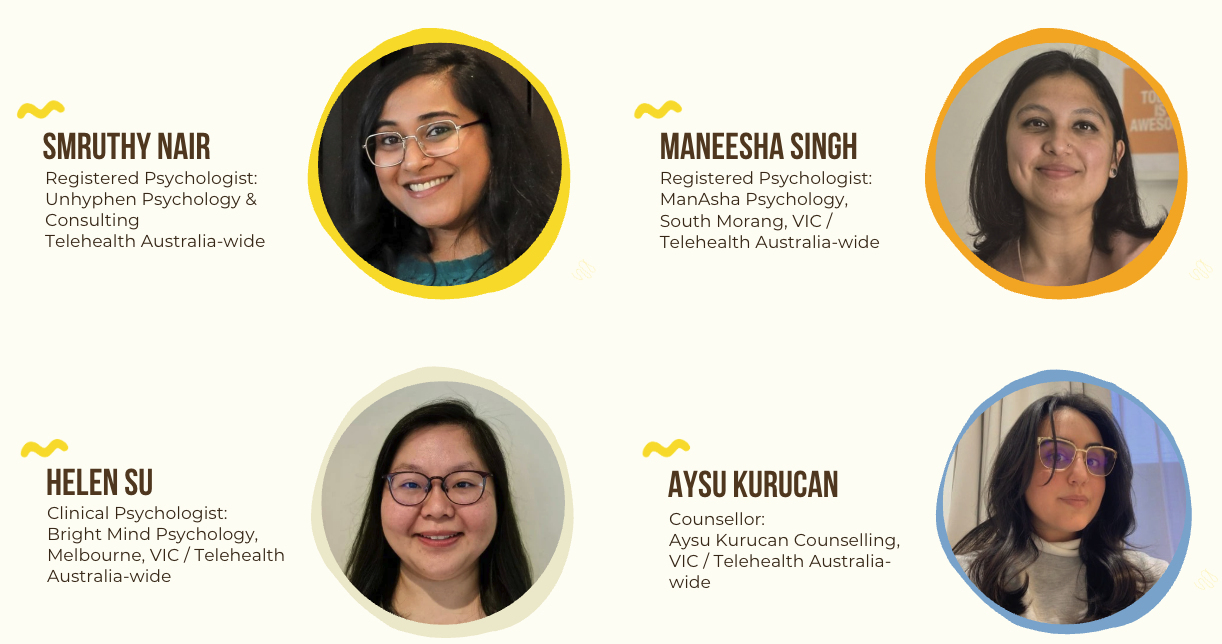
Our private practitioners are available for referrals. Please contact them directly via their profile HERE.
✨Thank you for reading up to this point!
We rely heavily on your generous support to provide ongoing and free mental health resources to Asian communities in Australia.
Support Shapes and Sounds HERE.
🐌 And last but not least:
Recently on Linkedin,
We shared our practitioner interview with registered psychologist Yixuan Li. Read our interview with her here.
💡For community members:
We created the "Essential Guide for Asian Australian Mental Health" by surveying over 350 Asian Australians during Covid-19 lockdowns.
Download our guide and learn about the three most pertinent areas of concern for the Asian community, with tips and strategies to support you through.
🤝For mental health service providers:
Shapes and Sounds supports mental health organisations and teams to feel confident and resourced in providing culturally-responsive care to the Asian community in Australia.
Download our information pack to learn more.